

Air travel across the Middle East is facing major disruption after the United States and Israel carried out strikes on Iran.
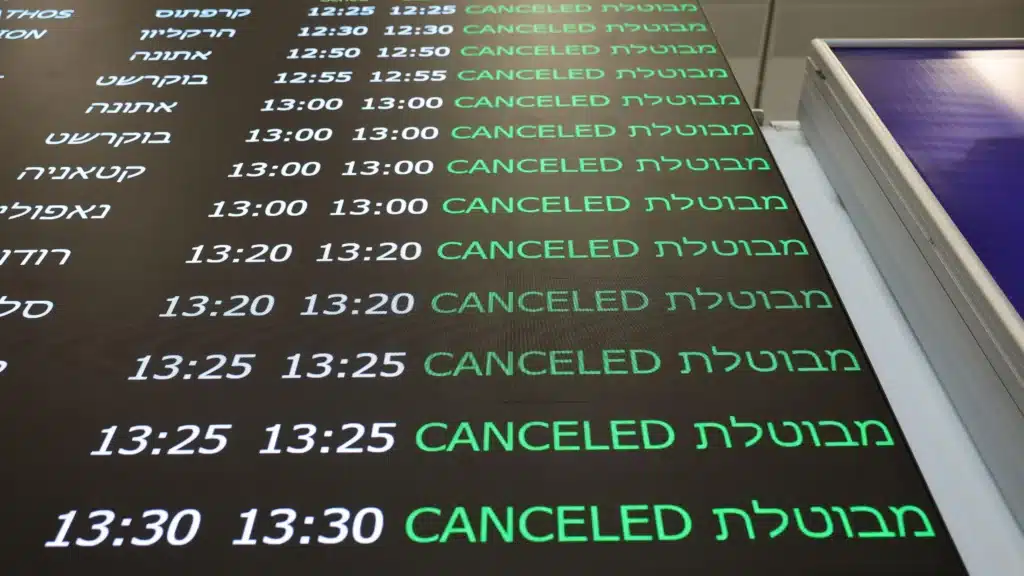
Airlines are cancelling or rerouting flights as tensions escalate. Carriers including British Airways and Virgin Atlantic have grounded services, while flights in and out of Dubai International Airport and Al Maktoum International Airport have been suspended.
The UK’s Foreign Office is now advising British nationals to avoid all but essential travel to Bahrain, Kuwait, Qatar and the United Arab Emirates. Those already in these countries are being urged to stay indoors and follow local safety advice.
The warnings follow retaliatory strikes launched by Iran targeting Gulf states, raising fears of further escalation.
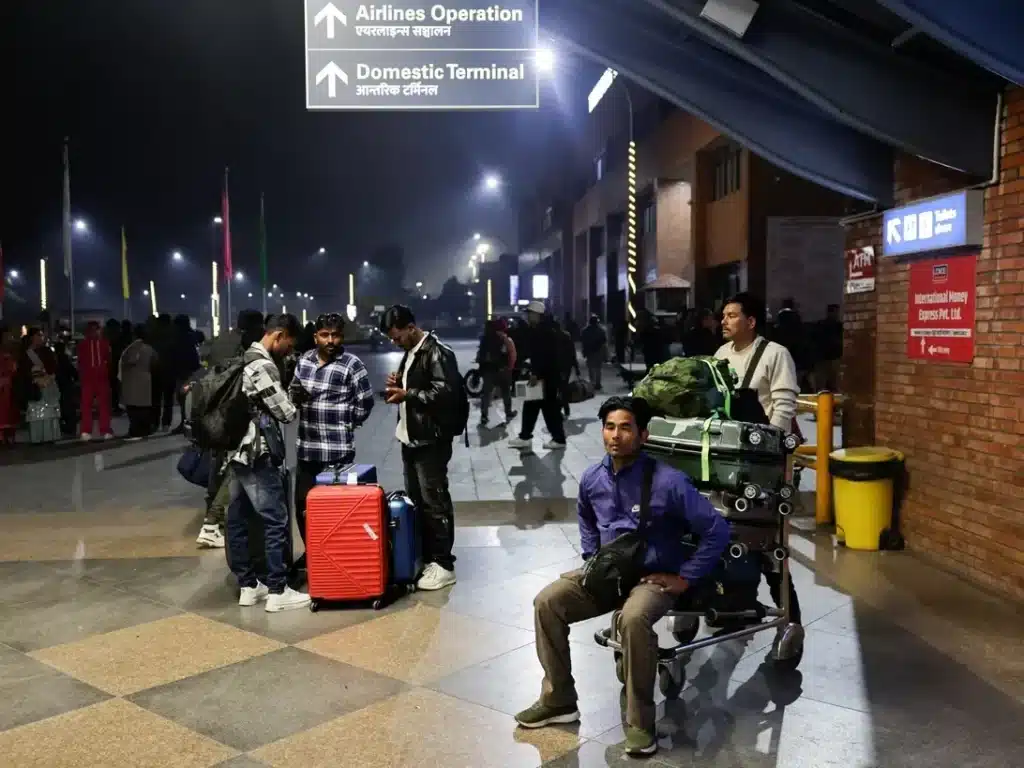
The disruption is also rippling beyond the region, affecting long-haul routes worldwide. Heathrow Airport has advised passengers to check directly with their airlines before travelling.
One person has died and 11 others have been injured following incidents at airports in Dubai and Abu Dhabi. Four of those hurt were staff members at Dubai International Airport, adding to growing concern among airport workers and travellers.
Stranded Travellers Reconsider Plans as Regional Tensions Escalate
Airlines have responded by suspending services as airspace across the region remains unstable. Emirates has paused all flights in and out of Dubai until 15:00 local time (13:00 GMT) on Monday, citing widespread closures. Meanwhile, Etihad Airways has halted departures from Abu Dhabi until 02:00 local time.
In the UK, British Airways has cancelled flights to Tel Aviv and Bahrain until Wednesday. The airline has warned that routes between Heathrow Airport and Abu Dhabi, Amman, Bahrain, Doha, Dubai and Tel Aviv could face disruption for several days.
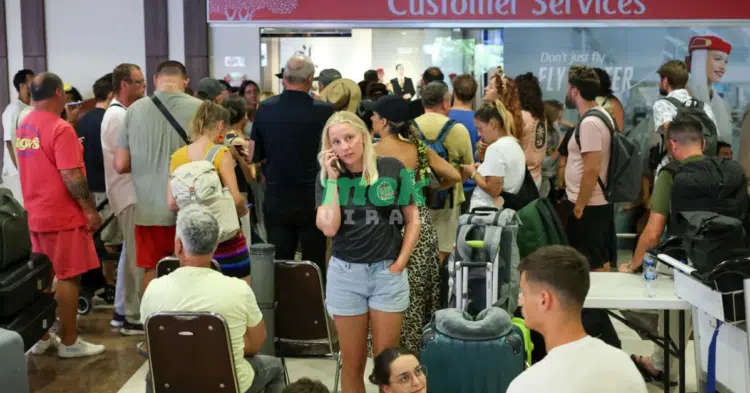
For many passengers, the uncertainty has turned travel plans upside down. Richard and Hannah, a couple from London, were on their way to Oman but are now stranded in Bahrain.
“In the early hours of this morning a drone attacked the airport, so we can’t reach Oman this evening as planned,” Hannah said on Sunday, describing it as an “uneasy 24 hours.”
With fears that tensions in the region could escalate further, the couple are now considering cutting their trip short and returning home, Richard said.
Airspace Closures Force Global Rerouting
Virgin Atlantic has suspended flights between Heathrow Airport and Riyadh on Sunday, after already cancelling weekend services from Heathrow to Dubai.
The airline has warned passengers that flights to India, Saudi Arabia and the Maldives may face longer journey times as aircraft are forced to take alternative routes around restricted airspace.
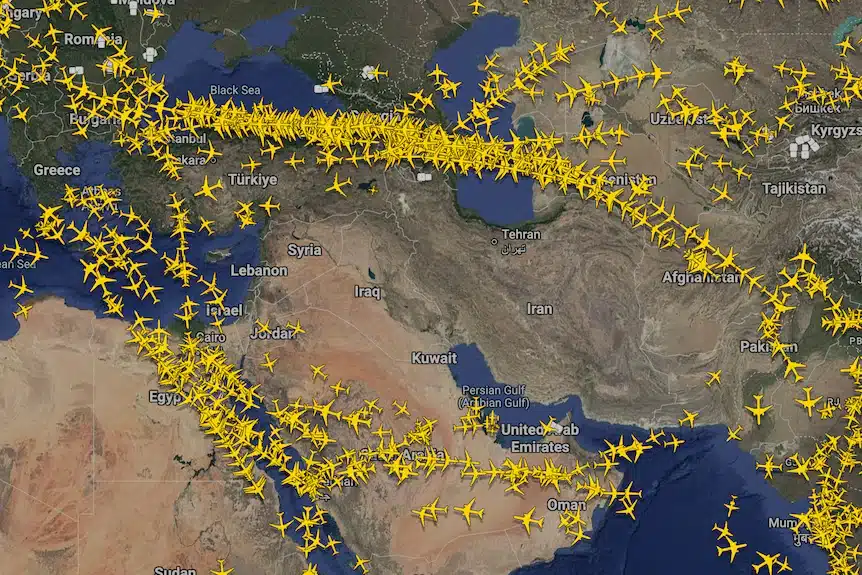
Virgin is one of many airlines across Europe, Asia and the Middle East that have cancelled or diverted flights to avoid closed or restricted skies. Airspace over Iran, Israel, Iraq, Qatar, Bahrain, Kuwait, Syria and the United Arab Emiratesremained closed on Sunday morning, while Saudi Arabia has partially restricted its airspace. Skies over Jordan and Lebanon remain open, though flight activity is limited.
Flight tracking data shows services between Europe and Asia being rerouted via Saudi Arabia or the Caucasus region.
Holiday Plans Disrupted as Passengers Face Uncertainty
For travellers, the disruption has meant extended uncertainty. Emma Belcher and her husband Vic were returning to Heathrow from a holiday in the Maldives via Dubai when their connecting flight was cancelled.
“There is absolutely no information about when they might open airspace, so we don’t know how long we’ll be here,” she said. “We were really looking forward to getting home to see the children as we haven’t been away without them before.”
Steve Rudderham and his wife, who were travelling to the Maldives to celebrate their wedding anniversary, remain stranded in Doha during what was meant to be a brief stopover.
“As the days go on and the vacation is eroded, we’re looking at plans just to get back home,” he said.
Widespread Flight Disruptions as Qatar Airspace Remains Closed
Qatar Airways has temporarily suspended operations due to the closure of Qatari airspace, with an update expected at 09:00 local time on Monday (06:00 GMT).
For holidaymakers like 71-year-old John Henry from Northampton, the situation has been unsettling. While out at a shopping centre in Qatar on Saturday, he experienced an air raid alert.
“We heard a bit of a thud and felt a tremor, and we saw a number of people moving quickly out of the shopping centre,” he told the BBC.
Qatar’s defence ministry confirmed it had intercepted missiles launched by Iran after explosions were reported in Doha.
The airspace disruption has caused massive knock-on effects for airlines around the world:
- Aegean Airlines suspended flights to and from Tel Aviv, Beirut, and Erbil until Monday
- Air Astana cancelled all Middle East flights until the end of Tuesday
- Air Canada cancelled Dubai flights until Tuesday, and Israel flights until next Sunday
- Air Europa cancelled Tel Aviv services until at least Monday
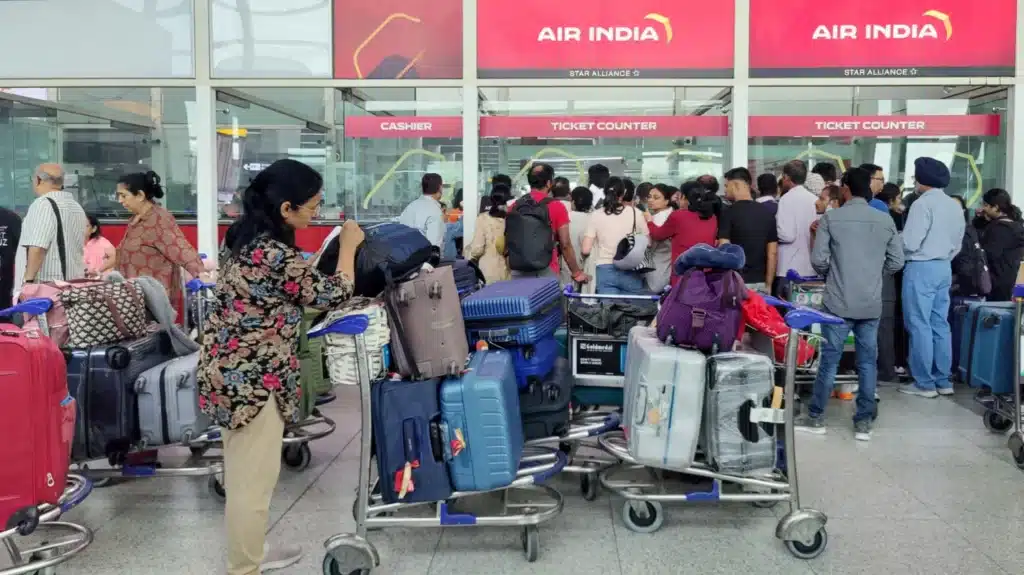
- Air India cancelled flights from Delhi, Mumbai, and Amritsar to London, New York, Paris, and other destinations
- Azerbaijan Airlines suspended flights in and out of Dubai, Doha, Jeddah, and Tel Aviv
- FlyDubai suspended Dubai flights until 15:00 local time (11:00 GMT) on Monday
- Indigo cancelled dozens of flights until Tuesday
- ITA Airways suspended flights to Tel Aviv and avoided Israeli, Lebanese, Jordanian, Iraqi, and Iranian airspace until next Saturday
- KLM cancelled services to Dubai, Dammam, and Riyadh, after already suspending Amsterdam–Tel Aviv
- LOT suspended flights to Tel Aviv until 15 March, and Dubai and Riyadh until Monday
- Lufthansa suspended flights to Tel Aviv, Beirut, Amman, Erbil, Dammam, and Tehran until next Sunday; Dubai and Abu Dhabi until 4 March
- Norwegian Air suspended all Dubai flights until Wednesday
- Pegasus Airlines cancelled services to Iran, Iraq, Jordan, and Lebanon on Sunday
- Turkish Airlines cancelled flights to Lebanon, Syria, Iraq, Iran, and Jordan on Sunday
- Wizz Air suspended all flights to and from Israel, Dubai, Abu Dhabi, and Amman until next Saturday
Passengers across Europe, Asia, and the Middle East are facing uncertainty as airlines reroute or cancel flights to avoid the closed and restricted skies. Many travellers remain stranded, with their plans upended until the situation stabilizes.
Rising Tensions in the Gulf Prompt Warnings and Military Alerts
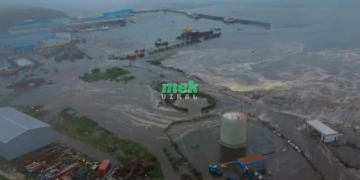
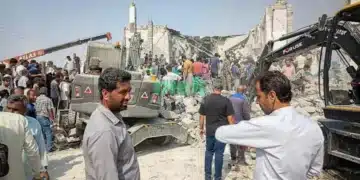
The situation across the Gulf and wider Middle East is intensifying as multiple countries report missile and drone activity. The United Arab Emirates said it had intercepted Iranian missiles and drones, while footage appears to show a US facility in Bahrain being struck. Meanwhile, Kuwait reported attacks by Iranian missiles and drones, and explosions were heard at Erbil airport early on Sunday.
In response, the UK Foreign Office has issued strong travel warnings. British citizens are advised against all travel to Israel and Palestine, and against all but essential travel to Bahrain, Qatar, Kuwait, and the UAE. Those already in these countries are encouraged to register with the Foreign Office to receive updates.
UK nationals in Saudi Arabia have been told to remain indoors in secure locations, while people in Jordan, Syria, Lebanon, Iraq, Yemen, Turkey, and Oman have been instructed to remain vigilant and take shelter if advised.
In Pakistan, the Foreign Office cautioned people to exercise care around protests, demonstrations, rallies, and religious gatherings after deadly pro-Iran demonstrations erupted in several cities. Staff in the country were instructed to restrict their movements.
US President Donald Trump said the strikes were motivated by a failure to reach an agreement on Iran’s nuclear programme and regime change. Meanwhile, UK Prime Minister Keir Starmer spoke to Trump on Saturday, noting that British planes were “in the sky” over the Middle East as part of a defensive mission to protect citizens, interests, and allies.
Alongside the leaders of France and Germany, Starmer urged Iran to refrain from “indiscriminate” attacks, emphasizing the need to avoid further escalation.
In these rapidly unfolding events, travellers and residents across the Middle East are urged to stay alert and follow official guidance. For the latest updates on flight disruptions, travel warnings, and regional developments, keep following MekVIRAL.